

Chapter Two
Phantom Chamber
What seems false is real
what is real, is fantasy
when dreams become both.
–Tengu Riddle
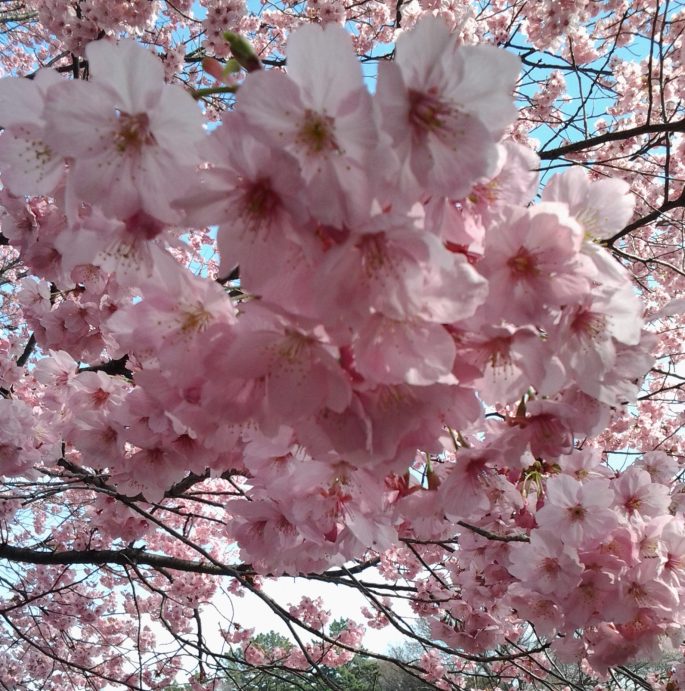
Into the courtyard, Tomiko hurried beneath lace blossoms–pink, ginger and white. In the springtime garden, the trees stood like parasols over her mother and auntie. The two women rested among the other ladies, beneath the fragrant trees: plum, peach, and cherry. Lounging seemed the only reason for their visit to the sacred mountains. While the men climbed the steps of Haguro-San to pay homage at the mountaintop shrine. Into the reflecting pond, the men would toss mirrors for the women of their clan. These image symbols served to show the female’s esteem for the gods of the mountains since the women were not allowed to pay tribute for themselves.
Tomiko clicked her tongue in aggravation. It galled her that the women of her station were expected to lead such futile lives. She could never be so compliant sitting around complacent while the “men” took part in the feast of life. It was this skewed thinking that caused her to keep her outlaw thoughts and deeds, such as her trek up the forbidden mountain, hidden in her heart-of-hearts.
Sadness sat on her chest–the weight of a wounded heart. She could barely breathe for hiding it.
Hiding and keeping secrets seemed the only way to live life on her terms.
Desperate to keep her secret, Tomiko held the jade egg close to her breast, like an infant, fragile and in need of protection as she skirted close to a rock fountain that swished and gurgled near the gate.
The last thing she wanted was more questions about her decisions, right or wrong.
The sound of Mother speaking her name jarred her nerves, like the shrill of a water bird, brown and speckled that preyed near her home on the western shore near Tsuruoka Castle. “Tomiko-san, where have you been?”
Tomiko skidded to a halt. She had no other choice, but to obey. Still, the fingers of her free hand curled into a fist as she turned to face the waggling finger that accused her.
Mother’s voice beat her name in staccato bursts like a mallet pounding the sides of a taiko drum barrel. “Tomiko Hino.” She sucked her teeth in exasperation. “Just look at you; your clothes are filthy!”
Tomiko cringed at the rolling eyes of disapproval, steeling herself for the worst to come as the tirade continued. Bending her face toward the ground, she gritted her teeth in agitation. Her stance was meant to appear as humiliation and shame. But on the inside, she seethed with frustrated anger.
Mother berated, “It cannot be too soon for you to conduct yourself as a proper wife-to-be!”
At the cutting words, Tomiko’s spine stiffened. Her head shot up, eyes glaring with unchecked defiance in Mother’s direction.
Tomiko had known Shun Sanada, her betrothed, since they were children, and had followed him wherever their adventures might lead. Tomiko had always loved Shun since she could remember. As his wife, she believed her life would not change from the freedom she now enjoyed, to that of the confining restrictions most wives of noblemen must endure.
It soothed her heart to believe that she would never have to bear the suffocating existence forced on Mother and Auntie, who sat like painted dolls on a shelf. The mere thought of such a fate clawed like death at Tomiko’s heart.
Her Auntie’s indulgent smile pulled her from the dark place where her mind had fallen. Auntie Said, “Ah, Fumiko-san let her be young while she can. There is time enough to be saddled with wifely duties.”
Auntie’s bold words forced the blood to Mother’s face. She gave her sister-in-law a stern, sidelong-glance filled with raw disapproval.
“Well, I can only imagine what Lord Sanada and his son would think if they could see her splattered with mud from head-to-toe.”
Auntie chuckled gently. “They would think, what a delightful, energetic mother she will make for strong-spirited sons and daughters.” She added without the slightest bow of her head in apology.
Tomiko bestowed a loving smile upon her Auntie. She could envision the serene lady, kimono tied up and fashioned as pants, trekking happily through a stream, or even climbing a sacred, forbidden mountain.
At the same time, an ashy whiteness spread from the roots of Mother’s dark hair to the base of her elegant neck. Her angry ravings replaced with alarm. Her quavering finger pointed toward the jade egg nestled in the scraped raw palm of Tomiko’s hand.
“Wha-what is that?” Mother’s eyes grew round as saucers. “From where did you get that?”
Auntie likewise looked askew at the strange object. “Hmm? Well…” Her gentle tone held no trace of blame, only bewilderment.
Resentment raw in her throat, Tomiko lifted her chin that much higher. “I found it. It, it is mine.” Her voice faltered. Still, she kept her gaze firm and resolute. She would rather die than yield her precious find.
Glancing down, she watched the jade-green skin of the egg suddenly fade into a robin’s speckled-blue. While its size shrank so that it nestled small as a silkworm’s spun cocoon against the lifeline crease that ran down the center of her palm.
In confused astonishment, Tomiko blinked. Her heart beat wildly. Had her eyes played tricks on her? Where had the jade egg gone? Her frantic gaze swept the ground in ever widening circles. Where, oh dear, oh dear, had it gone?
Gut-wrenching doubt swept through her mind, making her wonder if she had ever held the exquisite egg. Had she actually seen the priest on the steps leading up to the top of Haguro-San, or, for that matter, the King of the Tengu that stood before her in the haunted forest?
Panic grew as her mind swirled, making Tomiko feel suddenly sick to her stomach. On the slopes of the mountain, had she picked up an ordinary bird’s egg, deluding herself into thinking she had found some mysterious treasure?
Madness clawed at her mind. Her head ached. Too much had happened in one short morning and it was all crashing down around her.
Then a chuckle soft and quiet broke through the terror and confusion of her mind. Mother spoke, her angry tone replaced by affection. “Oh run along, Tomiko-chan.”
Astonished, Tomiko watched a tender smile play across her mother’s face. Mother continued, “But mind, clean yourself up!”
Tomiko stammered, “Yes, Oka-saan.”
Grateful for whatever had softened Mother’s heart, she bowed low in obedience. Then she spun around and hurried from the garden.
From behind, Mother’s strident voice echoed. “And walk like the lady that you are.”
Tomiko replied, “Yes-s-s, Oka-saan.”
Mother’s laughter echoed softly in the near distance. “What does she think to do with a robin’s egg? Brood and hatch it for the mother bird?”
Auntie giggled like a schoolgirl. “Perhaps she does.”
The irrational thought made Tomiko feel slightly unreal as if she floated rather than ran around the next corner. Safely out of sight from the garden and the prying eyes of her mother, she picked up her heels and raced toward the family’s private quarters. Skittering around another corner, she almost collided with an elderly servant. The woman’s arms piled high with clean laundry. Her old back bowed under the weight.
Tomiko tucked the egg inside a hidden pocket of her kimono, something she should have done earlier. She stopped, holding out her arms as if to assist the old woman.
Horrified, the servant ducked her head and hurried away down the corridor, muttering to herself.
A sigh of resignation whispered through Tomiko’s teeth. Why did things that were considered taboo attract her so? The daughter of a samurai master should never carry clean laundry, even in an attempt to help a bent-over, old woman that looked as if her back might break from the strain.
Exhausted both in mind and spirit, Tomiko slipped inside her room. She stepped inside, closing the rice paper door securely in place. Then she sank. Her knees pressed against the braided rice-rush floor.
From its hiding place, she pulled the changeling egg free. Jade-green once again, it lay nuzzled in the palm of her hand, just as it had when she plucked it from the ground near the stairs that led to Mount Haguro’s summit.
Weak with relief, she slumped down; her forehead bowed against the floor. Sojobo-sama, the name of the Tengu King, whispered through her mind. She rolled onto her back, holding the egg toward a trickle of sunlight that flowed through a crack above the door. Both the King and his egg had proven real enough, or else she had stepped into a dream of no return.
***
Darkness draped Haguro Mountain, as Tomiko lay on her sleeping mat. She gazed up toward the rafters. Transparent as fine webbing, the wooden slats melted away so that the jeweled night glittered through. Stars clung like dew drops. While a sharp tang against her tongue reminded Tomiko of salted air, though the edge of the sea washed against the shoreline of the sea, leagues in the distance. The rolling waves soothed her like a feral lullaby.
A phantom wind rattled the rice paper screens, stretched across perfect squares encased in the door face. The spectral wind swept her thoughts back to the haunted glade on Mount Haguro, and her meeting with the Tengu King.
Head pressed between damp palms; she tried to force the image of the fox spirit away as it tracked her through the underbrush. The Tengu King’s fox mistress, come to haunt and seduce her. Kitsune, a spirit creature that could transform at will into human shape. A gasp of surprise stretched Tomiko out, drowsy and content, as the fox maiden filled her mind, making her feel as if she floated somewhere above the floor.
Wrapped in veils of mists, like the ones that had surrounded King Sojobo, a man leaned over her. A glimmer of moonlight glowed softly against his cheek.
“Shun?” she whispered the name of her betrothed.
Though the man’s face stayed hidden in shadows, she could feel strong arms wrap gently around and beneath. Her breath quick and urgent, she entwined her arms around his neck, as she pulled her beloved close.
When Tomiko woke, morning light trickled past the edge of the open door, where she lay just inside the threshold. The sky above burst blue with yellow and orange light cast from the gates of the sun goddess’ sky palace. Tomiko listened to the warble of a lark, cheered by its exquisite love song.
“Shun…” Tomiko moaned, stroking fingertips across her bruised neck. The light touch ignited the earthy fragrance of pine needles that clung to her hair and robe.
Remembering something, she sat up straight, sending her confused glance around the room. It settled on the empty places where Mother and Auntie’s futon bed rolls should have reclined. Had the two women already gone to breakfast, or had they never come to sleep next to her last night?
Tomiko shifted her gaze toward the rice paper doors, opened onto the garden beyond. A smile spread slowly across her lips. Of course, the two women must have decided to spend the night with their husbands. After the wedding, she would forever spend her nights beside her beloved Shun.
***
Later that day, the family pilgrimage ended, and Tomiko found herself seated in the palanquin. Straddled across the muscled shoulders of its bearers, she felt the sedan chair, suspended by a single beam, move beneath her. Eyes drooping from lack of sleep, she leaned heavily against the inside wall.
Her fingers rested on the bamboo curtain. Chin propped against the window’s edge; she watched mist-shrouded Haguro. The mountain seemed to breathe, its summit filled with lungs that rose up and down in the crisp morning air. Her hungry eyes devoured the mystical village as both it and the mountain disappeared around a curve in the road. Her heart ached as if part of her soul was left clinging to the mountain’s haunted cliffs.
She slumped down in the cushioned seat, letting the bamboo curtain fall back in place. Her heavy eyelids slid shut as she drifted into sleep, so deep that not even the King of the Tengu could enter her dreams.
Copyright © 2012 by Ledia Runnels
IF YOU LIKED THIS POST, PLEASE SHARE!
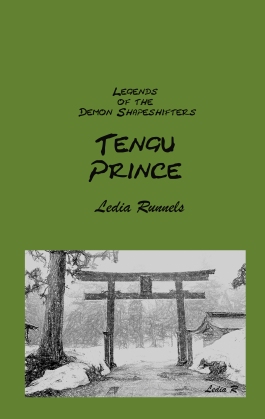
(For all of Ledia Runnels’ published works press on the book image below.)


 Edo Tour
 Kekkaishi
 Touhou Project
 Shōnen Onmyōji
 Teito Monogatari
 Inuyasha
 Natsume’s Book of Friends
 Spirited Away
 Mahou Sensei Negima!
 Tokyo Ravens
 Kantai Collection
 Descendants of Darkness
 Inazuma Eleven GO
 Red Data Girl






 Ledia Runnels' "Mysterious Orient"